
Understanding Leash Reactivity: Why Does Your Dog Go Crazy on Walks?
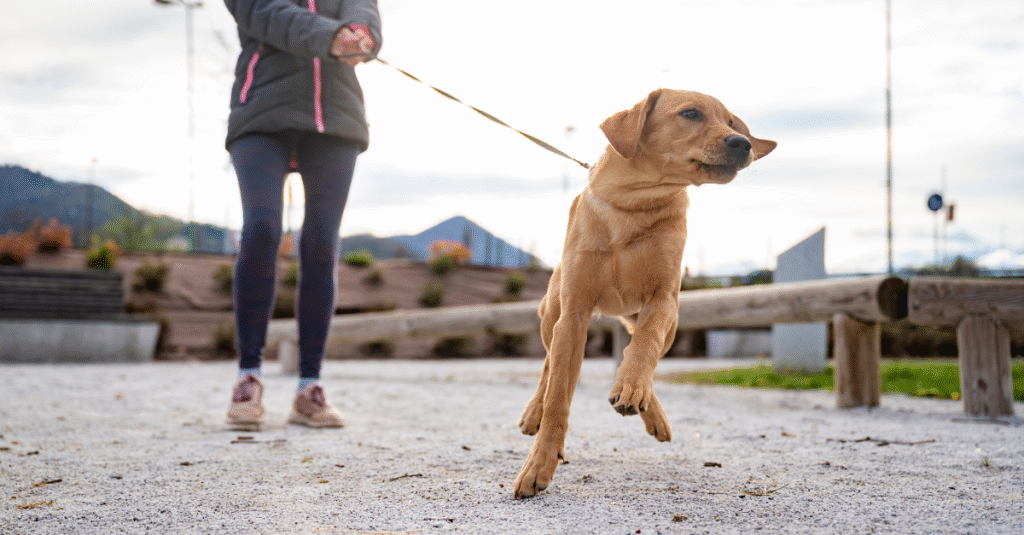
Does your dog turn into a barking, lunging mess the moment they see another dog on walks? You’re not alone. Leash reactivity is one of the most common – and frustrating – behavior issues dog owners face.
At its core, leash reactivity stems from:
-
Frustration (wanting to greet but being restrained)
-
Fear (feeling trapped by the leash)
-
Lack of socialization (not knowing how to act around triggers)
The good news? With the right approach, you CAN transform your reactive rover into a calm, confident walking companion. Let me show you how.
Step 1: Identify Your Dog’s Triggers
Every reactive dog has specific triggers. Common ones include:
✓ Other dogs (especially certain sizes/breeds)
✓ Joggers or cyclists
✓ Children playing
✓ Loud vehicles
Pro Tip: Keep a “reactivity journal” to track what sets your dog off and at what distance.
Step 2: Master the Engage-Disengage Game
This foundation exercise teaches your dog to voluntarily disengage from triggers:
-
Start at a distance where your dog notices but doesn’t react
-
When they look at the trigger, mark with “Yes!” or a clicker
-
Immediately reward with high-value treats
-
Gradually decrease distance as your dog improves
What to Use: Small, smelly treats like chicken, hot dogs, or cheese work best.
Step 3: Create Positive Associations
Help your dog learn triggers predict good things:
-
Play the “Find It” game (toss treats on ground when triggers appear)
-
Use happy, upbeat tones (“What’s that? Good dog!”)
-
Reward calm behavior before reaction starts
Avoid: Jerking the leash or saying “No!” – this increases tension.
Step 4: Teach Alternative Behaviors
Give your dog something better to do than react:
-
“Watch me” (eye contact command)
-
“Let’s go” (180° turn away from trigger)
-
“Sniff” (redirect to ground searching)
Practice these daily in low-distraction environments first.
Step 5: Manage the Environment
Set your dog up for success:
✔ Use front-clip harnesses for better control
✔ Walk during quieter times of day
✔ Cross the street or create space when needed
✔ Consider visual barriers like parked cars
When to Seek Professional Help
If your dog:
-
Doesn’t improve after consistent training
-
Shows signs of aggression (growling, snapping)
-
Stresses you out on every walk
…it’s time for expert guidance.
Transform Your Reactive Dog with Doggy Dan’s Canine Reactivity Webinar
Tired of stressful walks? Doggy Dan’s automatic online seminar gives you:
✅ Science-backed techniques to reduce reactivity
✅ Step-by-step video lessons you can follow at home
✅ Lifetime access to training materials
✅ Gentle, force-free methods that actually work
“I went from dreading walks to enjoying them again. My dog now calmly passes other dogs – something I never thought possible!” – Sarah K., webinar graduate
Click Here to Fix Your Dog’s Leash Reactivity Today
Final Thoughts: You CAN Have Peaceful Walks Again
Remember:
-
Progress takes time – celebrate small wins
-
Stay consistent with training
-
Keep sessions positive and stress-free
-
Every dog can improve with the right approach
For more in-depth help transforming your reactive dog, don’t miss Doggy Dan’s life-changing webinar.
What’s your biggest leash reactivity challenge? Share below and I’ll offer personalized advice! 🐾